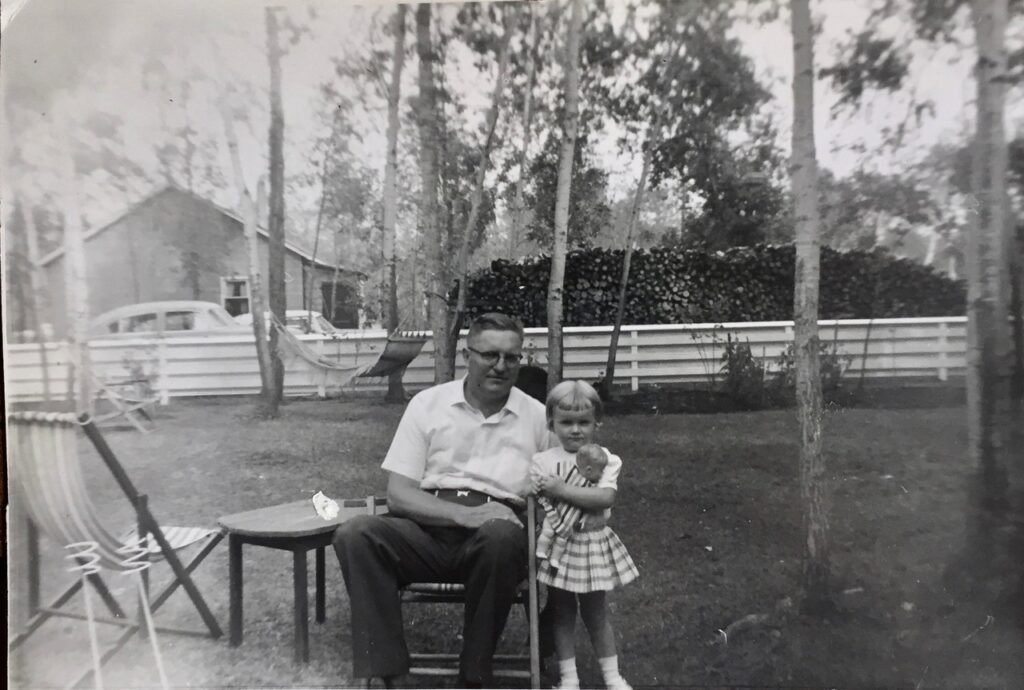
It is with great sadness and a lifetime of wonderful memories that we share the news of Eileen Pennycook’s passing on Sunday Sept 11, 2022 at the age of 92.
Eileen was born in Souris, Manitoba as the youngest child of Doris and James Murphy.
She was predeceased by all her siblings, Stan Murphy, Grace Stephen, Isabel Harman, Frances Thompson, Jean French, Jim Murphy and her son-in-law, Ken Coe.
She is deeply missed by the love of her life, Rod Pennycook; and her six children, Rod Pennycook (Francine), David Pennycook (Cathy), Kathleen Coe (Ken), Margaret Daniel (George), Moira Farrer (Ian), and Chris Pennycook (Linda); grandchildren and great-grandchildren, Scott (Vanessa), Mya, Nixon; Shawn (Allison), Owen, Hailey; Alex (Lauren); Tara; Jackie; Andrew (Paige) Maxwell, Wallace; Ben (Amanda) Paige, Luke; Leah (Ashley) Oaklyn; Erica (Blake) Kennedy; Randy; Jordan; as well as Moira Malegus and many nieces, nephews, and their children.
Eileen moved to Winnipeg in 1935, where she resided for the remainder of her life. She was educated at Wellington, Laura Secord, St. John’s and Gordon Bell schools. When she was 15 she met Rod “the sweetheart of her life and the dearest husband she could ask for”. They were paired together by chance during a dance at the Old St. Andrews Young People Group and married in 1951.
Eileen worked for Manitoba Telephone System prior to starting a family in 1952. She was an amazing wife, mother, friend, gramma, and truly lived up to the title of ‘great’ grandma. She was well known for her athletic prowess and encouraged sport and sportsmanship to all. In her early years she played basketball and fencing but in later years golf and curling were her passion. She was decorated with many trophies and was particularly proud to Skip her team to winning the Manitoba Senior Ladies Curling Championships in 1981 and 1991, representing Manitoba in the National Bonspiel in both those years. She made lifelong friends while curling at Valour Road/Thistle (Honorary Member), Wildwood and the Grain Exchange Curling Clubs. Both Rod and Eileen also enjoyed playing in numerous duplicate bridge clubs.
She was extremely generous with her time and energy, serving as the President of the Grain Exchange Curling Club (Honorary Life Member) and on the boards of the Manitoba Curling Association, Winnipeg Symphony, St Amant, and at St. Charles Country Club where she held the position of Ladies President and was one of the first female board members. To better serve these roles Eileen honed her speaking skills through the Toastmasters Organization and attained the role of President for that club.
Eileen’s fondest memories were of her time spent at the family cottage in Gimli with Rod, her children and extended family; her many enjoyable trips across the globe; and especially her winters in Palm Springs. The family Christmas and her birthday golf tournaments were cherished by those that loved her.
She will be remembered and missed for her devotion to Rod and her children, living life to the fullest, being the life of the party, beating all of us at bridge and most card games, and loved by all she touched.
The last couple of years were challenging with Mom bravely battling the debilitating effects of dementia. The family extends their gratitude to the dedicated Arbour Memory Care staff at Brightwater Senior Living with special thanks to Kim Nott and also to private caregivers Pat, Marcela and Brigit.
A full history of the Pennycooks in South Beach is here.
The Annual General Meeting of South Beach Property Owners’ Association will be held Sunday, September 4th at 11AM at J. Stephen Park. Because we have a covered pavilion there is no rain date.
Please bring a chair.
Membership dues are $10 cash and run from July 1 to June 30th. Each paid household is allowed one vote. 12 members consitute a quorum.
Why pay a membership fee? A community organization with shared values and branding or website cannot exist without a paid membership. The money collected acts also as a safety net for any projects we may want to accomplish together. The shared spaces we all enjoy are due to the foresight of our members over many years.
Submitted by Ron Harman, July 28, 2022 (One of a series of articles about the history of South Beach and its families)
The Harman family has been connected to South Beach since the early 1940’s; but their involvement with this general area of Lake Winnipeg goes back to the 1930s.
Morris Harman and wife Beth (nee Elizabeth DeWinter) purchased five lakeside lots near Sandy Hook in the early 30’s. By today’s landmarks these lots were located a few lots North of Camp Massad and south of Jimmy Doyle’s Golf Course on PTH 519. Back then, the Salvation Army had a summer camp on the lake at the east end of PTH 519.
Two lots were cleared to build a cottage, the others remained as bush. The original cottage, lot 59, which is still there today (as a house), was about 30′ by 24′ with no interior walls. Hospital type curtains divided this single area into 4 zones. Pulled back during the day to provide one large open area; pulled closed at night to provide 3 bedrooms and a zone for the kitchen. Each “bedroom” had a Davenport that was a couch during the day and converted to a double bed at night. The massive wood stove in the kitchen area was used to heat the cottage as well as for cooking. There was an outhouse and tool shed and parking for 4 or 5 cars. No running water. Drinking water was obtained from a well about a half mile south near the Polish Pioneer cemetery. Lake water was pumped up for lawns and gardens.
Morris and Beth (grandparents to Ron and Rick Harman) had 4 surviving children; Raymond, Reginald (better known as Bud), Patricia and Gerry. The two older boys assisted with constructing the cabin. Morris was a carpenter/tinsmith by trade. He owned Kildonan Sheet Metal which he operated from his house at 330 Ottawa Avenue in East Kildonan, Winnipeg.
PAT AND GRANDAD AT THE GATE OF LOT 59SANDY HOOK MORRIS HARMAN, PAT HARMAN, GLORIA STANIER JULY 1945
The level of Lake Winnipeg varied depending on the season and the wind direction. Typically it was low during the early summer. The shoreline was course gravel, not sand, that turned into mud, complete with reeds, as you went towards the lake. Cottagers would lay 2″ x 8″ planks on the muck so you could reach the water cleanly. As the water level rose, they would reposition these boards to construct rudimentary plank piers, each section about 8 feet long and 16 inches wide, held up by posts sunk in the mud. Boats had to be brought up onto shore when not in use; hauled across some 100 feet of gumbo and gravel.
Bud Harman married Isabel Murphy in 1943, and they had two boys; Ron (1944) and Rick (1946). As a family, most of our summers were spent at South Beach, in and around the Stephen compound. We would always stop at Sandy Hook on our way there to visit with our grandparents.
When Ron was young, Grandma Harman often took him to Sandy Hook for the weekend, on the pretext of giving Isabel a break. The car ride was a fabulous experience. Granddad smoked White Owl cigars; he always had 2 or 3 in his shirt pocket. The car was a big Desoto with fabric upholstery that had absorbed years of these fumes. It was like riding in a vintage humidor. We always stopped at the Half Moon (Lockport) for ice cream. The privileges of being the eldest grandchild.
During these times, Auntie Pat, who owned a wooden Peterbough with a 10 HP Johnson would take Ron into Winnipeg Beach via water; let him drive the boat and taught him how to water ski. In 1955 they went to Winnipeg Beach to watch Kathie McIntosh complete her swim across Lake Winnipeg from Grand Beach. There was a massive flotilla of boats and a huge crowd on the beach to watch her exit the water in the early evening.
Bud Harman enlisted in the RC Navy and was stationed in Victoria where Ron was born. Following the war they returned to Winnipeg. Isabel’s older sister, Grace, had married George Stephen. Their eldest son, Allan, was born a few months after Ron. Starting in 1945, Grace and Isabel, and their boys, essentially spent all their summers at South Beach. Grace and George had their own cottage, named the Baltimore; located on Hansson Ave, a couple of lots west of Evan’s store.
Judging from the early (1945) photos taken around Dorrery Lodge, clothing was optional. Anyone familiar with the use of cloth diapers and the constant laundering involved can appreciate the benefits and time-saving aspects of simply letting the boys go ‘au naturel.
RON AND ALLAN 1945, FRONT YARD OF DORRERY LODGE LOOKING TOWARDS THE FUTURE LOCATION OF RICK AND PAT HARMAN’S COTTAGE
At this time, Hansson and Ethel were through streets. They connected South Colonization Road to 3rd Avenue which ran along the shoreline (one cottage lot in). Benedict Street ran west from 3rd Avenue but came to a dead end in front of Dorrery Lodge; the Stephen compound.
Everything further west to South Colonization Road was basically forest. There was no Anna Avenue. There was a trail through the bush from the Stephen’s place to Hansson. This trail came out more or less in front of Evan’s store.
The lake access area at the east end of Benedict was referred to as First Beach; and the access at the east end of Ethel was called Second Beach. The shoreline between First and Second Beach was fairly muddy with rocks. You had to wade out into the lake if you wanted to walk from First to Second Beach along the shore. It was easier to use Third Avenue. However, shoreline from Second Beach all the way south to Willow Island was a beautiful expanse of sand. Second Beach was the more popular beach.
ISABEL AND GRACE WITH RON AND ALLAN AT FIRST BEACH
In the photo of Isabel and Grace standing with Ron and Allan (circa 1946), the view is from First Beach looking north towards Gimli. In the background you can see a wooden breakwater consisting of massive telephone-type poles drilled into the sand and bolted together. This breakwater structure remained well into the mid 1950’s. As kids, we would swim out, climb up the posts and dive into the water. We also found the remains of an old stone fireplace that was underwater just to the south of that breakwater. Obviously, previous to 1945, there must have been cottages further east on Benedict; out into what is now the lake.
In the early years, before Jean and Cec French (who owned Galway Bay located directly east of Dorrery Lodge) allowed Bud Harman to park his 16′ trailer on their lot, we would rent various places around the Stephen compound for the entire summer. One such place was the Boys Veranda attached to the east side of Dorrery Lodge.
The old Dorrery Lodge, while it was home to Mom and Pop Stephen and their seven children, had three verandas. The one on the West side was the main entrance to the Lodge, sort of a storage area, taking you directly into the kitchen. The one on the East side which had a separate outside entrance but no direct access to the main cottage was called the Boys veranda. The one on the North side which had no external access and was connected to the main cottage was called the Girls veranda.
The Boys veranda was about 8′ wide and maybe 24′ long. Sort of like a bowling lane with a door at the south end and an internal partition at the north end to form a ‘bedroom’. As was the custom back then, the partitions were about 7′ feet high, not to the ceiling; and the internal “door” was a curtain, on a rod, drawn across the opening. The entire outside wall had screened windows; but I don’t recall there being any glass. There was an ice box and a hot plate; a davenport that converted to a bed, and a table with chairs in the main section. The back room had a bed with a dresser. An old framed picture of Dogs Playing Poker was hung on the wall.
There was no running water. Drinking water was obtained from the artesian well that had been outfitted with a pump handle, located at the corner of Hansson and Third. The water was very cold and contained so much iron that the rocks around the well were orange in colour. The water tasted like blood. A daily chore was to get a pail of ‘drinking’ water. Tea made with this water not only had an interesting taste; but it left a scum-like residue in the cups.
This well water was too ‘hard’ for washing; it was impossible to produce a soapy lather. At each cottage, there were huge rain barrels, connected to the eave troughs. These collected the ‘soft’ water that was used for washing clothes, dishes and your hands. Although there were screen tops on these rain barrels, the water that was collected always looked a little sketchy; especially during fish fly season.
The toilet was the Stephen’s outhouse that was located over by their metal shed close to the chicken coop and vegetable garden. Mom Stephen collected eggs daily, and Pop Stephen would periodically decapitate a hen. There was a foot pedal style grindstone kept in the shed; used to sharpen knives and axes.
Another rental place was the Nook. This was an original version of the tiny house. Maybe it was 12′ by 12′; complete with a separate bedroom, a kitchen and a convertible couch; suitable for a family of four. Cannot recall experiencing any crowding or hardship. Obviously, as kids, we only slept, and ate breakfast and supper there. Otherwise we were outside.
On rainy days we’d be in someone’s veranda that was large enough to fit 5 or 6 kids. Jean and Cec French at Galway Bay had the best veranda; complete with a table and benches that could seat whoever showed up.
Ice was delivered, door to door, by a local vendor using a wagon. The icehouse itself was located on South Colonization Road across from Stan’s store. Periodically, one of the local fishermen would come by selling fillets of fresh pickerel.
Small wagons were a vital mode of transportation. There were used to haul water, to transport kids to the beach, to haul beach blankets and food stuffs to the lake. Everyone had a wagon.
Ron and Allan, being the same age, hung around together every summer for over a decade. We crawled through the icehouse that was located next to the fish processing plant in Gimli harbour close to where the Museum and Yacht Club are located today. Not the wisest thing to do; climbing to the top of blocks of slippery ice, covered in straw that hid the crevasses into which one could fall and never be heard from again.
We explored the Parrish and Heimbecker grain elevator; examining the weights, scales and grates. Once we climbed an inside ladder to the top of the elevator in order to look out of the small window that was up there. The wooden ladder went straight up for a very long way, through an unlit shaft. Some of the rungs were missing, so periodically you had to take an extra long step to continue. Once at the top, we convinced ourselves that we could see the water tower at Winnipeg Beach. But I doubt that we saw much past Willow Island. Climbing down was a bit scary; we only did that once.
Our Granddad Murphy was an engineer on the CPR. Sometimes he would be on the run to Riverton. On those occasions all the cousins would go to the train station to watch the big steam locomotive pull in with Granddad in the cab. Once the passengers and freight were off, we were allowed to board the coaches for the 200 yard ride to the water tank. Once filled with water, the engine would reverse to the station; and we’d get off.
A few of the older cousins were smuggled (one per trip) into the cab to ride with Granddad from Gimli to Riverton. That was a memorable experience: the distinctive smell of steam and coal and oily rags, watching the fireman open the firebox and shovelling coal into the roaring flames, viewing the many gauges and hearing the stream whistle blast whenever a crossroad occurred. The parents of which ever grandchild selected for the trip would drive to Riverton to collect the kid.
ALLAN, RICK, RON, IN THE BACKYARD OF THE BALTIMORE, CIRCA 1953
Rick, although a couple of years younger, would often tag along with Ron and Allan on these adventures. One time we walked the CPR tracks from Gimli to Winnipeg Beach with the hope of getting a day’s employment at the Boardwalk. We sat under the shallow trestle at Willow Creek as a train went over; convinced that the whole structure, which was only 3 feet above our heads, was about to collapse.
Never did get any work. The only offer was from the pony-ride guy who always set up next to the wooden rollercoaster. If we agreed to lead ponies around for 3 or 4 hours, we’d get a free ride at the end of the day. We declined.
In the late 50s, in the quiet of a summer’s evening you could hear the howling of what we thought were wolves. One day, the three of us decided we would check this out. Cutting through the bush, we snuck up on what was the back end of Gilley’s mink ranch. In addition to rows of cages containing vicious looking mink that were running hysterically around in their pens, were about eight very large husky-like dogs. These dogs were used in the winter to pull the sleds involved in ice fishing. It was the dogs that were doing the howling. The dogs looked as mean as the mink. Each dog was tied to a fairly flimsy sapling. Once they saw us, their lunges bent the trees to near breaking. We didn’t stay there very long.
The Icelandic Festival was always a big event. We’d go to the parade which involved many groups of Shriners. On average, they were a much younger group back then. Often, over that weekend, some of these Shriners, who were friends of our Aunts and Uncles would visit the Stephen compound.
But it was the races that interested us most. In the mid to late 1950s, there were cash prizes for 1st, 2nd and 3rd. Not a lot of money, but enough to acquire a stash of candy. You actually had to ‘register’ to enter a particular race. It was our mistaken belief that you had to be Icelandic to register. So we added ‘son’ to our last names.
It was customary to walk into Gimli using 3rd Ave, passing by the Arnason Cabins located on the lake at Colville. Here you could get on the stone wall walkway that took you almost to the Betel Nursing Home. The original version of this retaining wall was dramatically more narrow than what exists today. The main pier was much shorter then; with a lighthouse at the end. The Goldfield and Keenora would tie up to the main pier; while the fishing fleet boats were lashed 2 – 3 deep on the southern pier.
For a couple of years, in the late 1950s, there was a military rescue boat moored between the fishing boats on the southern pier. Only rarely did we actually see any crew on this boat. A few times we did get to speak with them; but they were pretty tight lipped. We did learn that they were there in case any T33 training planes from the Gimli airbase had to ditch into the lake. Maybe twice we saw that rescue ship race out of the harbour. But we never heard any news reports concerning aircraft accidents.
The gear on the rescue boat was quite unique; stretchers made of mesh; long handled gaffs; various floatation devices. A crew member did tell us that some pilots, particularly those from the Middle East, when flying in clouds or without a visible horizon, sometimes experience a condition such that they believe that they are flying upside down, when really they are not. So when they execute the manoeuvre of pulling up; they are actually going down and crashing into the lake.
The sand bars at Second Beach were spectacular. There were always at least two; one about 20′ off shore and another maybe 60′ off shore. You could wade to the first one. But you’d have to swim to the second one. Once you reached it, you would be standing in water often below your waist. It was always a strange sight to see someone so far out walking through the water.
The exact location and depth of the sandbars constantly changed, probably due to changes in the wind direction. Then there was the mystical third sand bar. It would be at least 100′ or more out there; if it was there at all. Only the really good swimmers would search for this elusive sandbar.
Often we would walk to Willow Island along the expansive sandy beach, which at times was over 100 feet wide. Eventually you’d reach the shallow channel that separated the beach from the island. The depth was usually less than 5 feet. So even if you weren’t in swim gear, you could strip off your clothes and hold them in a bundle over your head as you went across; commando style.
The lake side of the island was more rugged than the sandy beach. It was covered with bushes and rocks making the walk more difficult. About a mile along, there was the main channel that connected the lake to the marshy western area. This channel was very wide, very deep and had a significant current. There was no way to cross this.
When the lake water was out, you could access Second Beach with a car and drive for miles towards Willow Island. In the late 1950s older teenagers, or cadets from the Gimli airbase would take their cars down the beach to party. Later in the afternoon they’d drive back through a beach crowded with kids and supervising adults. These incidents never turned out well.
There were occasions when the beachgoers would dig fairly deep trenches across the beach, bury logs that protruded about eighteen inches out of the sand and move substantial rocks onto the beach. The returning party goers would run into this obstacle course. There were reports of some cars losing their oilpans.
Our Auntie Jean French was particularly upset with this situation. The safety of children was at stake. Somehow the Winnipeg Free Press (maybe the Tribune) heard about this, interviewed Jean and wrote an article. The headlines were something like ‘Little Peyton Place at South Beach Gimli‘. The Peyton Place reference was to a then current movie that was based on a rather (for its time) racy pocket novel. The story made it into other media outlets. Needless to say, it caused quite a stir in the otherwise sleepy ambiance of South Beach.
Sometime in the early to mid 1960’s, George Stephen, Gordon Harley and Bud Harman purchased an acre of land immediately south of the Stephen compound: Dorrery Lodge. They divided it into four quarter acre lots, which sat as idle bush for a number of years. Between 1975 and 1978, Allan and Douglas Stephen built a new cottage for their parents to replace their existing cottage: the Baltimore. Bud Harman, having cleared his quarter acre (at the southwest corner of Benedict and Anna) purchased the old cottage and had it moved to the site.
PICTURES OF BALTIMORE BEING MOVED
Bud and Isabel Harman, for the first time in over 20 years, now had their own cottage. This cottage was enlarged with an addition that included an indoor bathroom, another bedroom, living room and outdoor deck. This relocated and now expanded cottage was not given a real name. However, periodically, Bud would hang out a beautifully carved sign (prepared by his grandson Trevor Harman) that simply said Bugger Off.
Bud with his sign
This is the end of PART ONE; PART TWO has yet to be written.
After a brief illness, it is with heavy hearts that we announce the passing of Sherilyn Ann Stephen (nee Kolisnyk) on December 8, 2021, at the age of 72 years.
Sheryl was born in Winnipeg and grew up in East Kildonan, where she made many lifelong friends. In the 1950s her family purchased a cabin on the lakefront in South Beach, Gimli, which became their favourite summer destination. It is also where she met the love of her life Allan, whose family had a cottage down the road. She would always fondly tell stories of how they met and those early days of courtship at the beach. This was a love story that lasted for 46 years. (See this article for the Stephen family history in South Beach Stephen Family in South Beach).
Sheryl graduated with her teaching certificate from the University of Manitoba. She married Allan in 1969 and soon after left for Toronto to begin their married lives and new careers in the big city. They moved back to Winnipeg a few years later to be closer to their roots and start a family. They settled in Southdale, where they raised their three children and were active members of the community through their kids’ sports, music, church and volunteer work. She loved the role of being a stay-at-home mom. She thrived on nurturing her family through delicious home-cooked meals, baking, and keeping the household running smoothly. She also took time to stay active through exercise and daily walks with friends. She was an accomplished sewer; from making her own clothes in her youth to sewing doll clothes and costumes for her kids and grandkids. Over the years she hosted many family gatherings, which brought everyone together on a regular basis.
In their retirement years Allan and Sheryl found many opportunities to travel with friends and family. They particularly enjoyed wintering in Texas, where they took up square dancing as a newfound activity. Sheryl’s five grandkids were her pride and joy. She loved spending time with them and was always creating fun environments where they could work on crafts, bake, and make special memories together. Very thoughtful and caring, Sheryl would always put others before herself. She was a true angel in this world and will be deeply missed by all who knew and loved her.
Sheryl will be greatly missed and lovingly remembered by her children: Jeffrey (Susan) and daughter Kathryn; Craig (Sandra) and children, Lauren and Clay; and Allison (Nicole) and children, Caleb and Lily; her mother Frances Kolisnyk; sister Marlene Cooper, and numerous nieces, nephews, cousins, and friends.
A service will be held at the Windsor Park United Church, 1062 Autumnwood Drive on Wednesday, December 22, 2021 at 11:00 a.m.
It is with great sadness that we announce Ken’s passing on July 29th, 2021, at the age of 71. He went peacefully with his wife Kathleen, and two sons Scott and Shawn at his side.
He will be lovingly remembered by his wife Kathleen, his sons Scott and Shawn, their wives Vanessa and Allison and his grandchildren Owen, Hailey, Mya and Nixon.
Ken was born to Florence and Albert Coe on February 26th, 1950 in Winnipeg, Manitoba. He was predeceased by both parents and brother Keith. Ken grew up in East Elmwood on Beach Avenue, then moved his family to River Heights in the late 1980’s. He was active with the community club sports and coached both his boys hockey teams. He supported his sons and his grandchildren in all the sports that they played. He always made sure they had everything they needed, not just in sports, but in life.
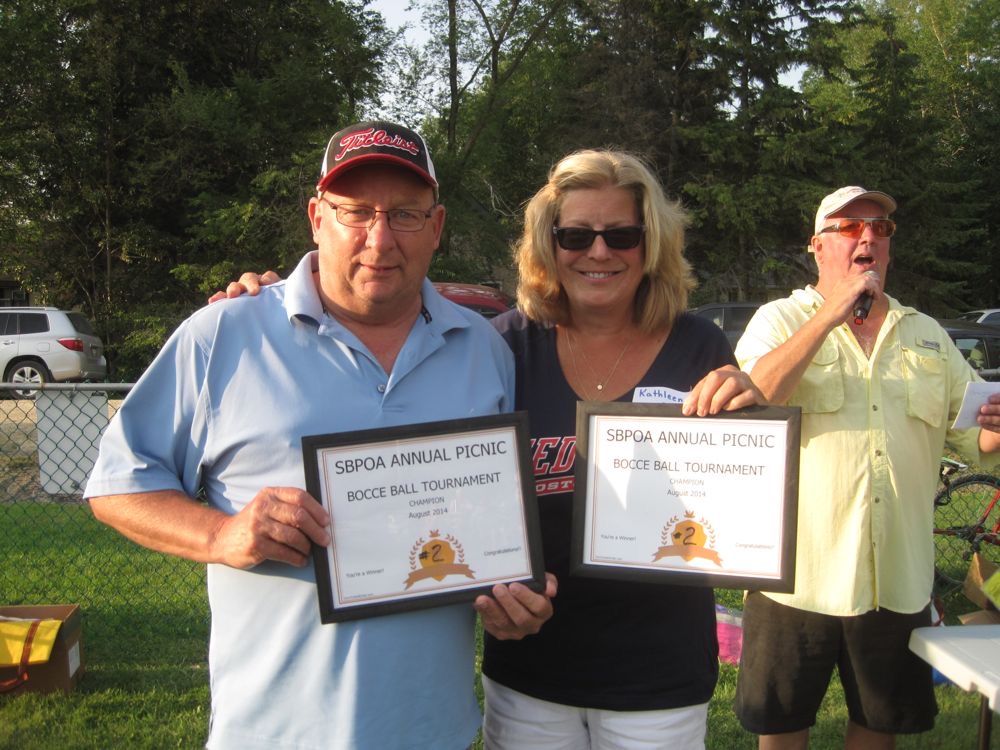
Marrying into the Pennycook family brought Ken into their rich family history in South Beach. Read about that here. He served on the South Beach Property Owners Association executive for many years.
South Beach Annual Picnic and Bocce Ball Tournament 2014
Professionally, Ken had a long and fulfilling career with Winnipeg/Manitoba Hydro. He spent most of his 35+ years as a Foreman of Street Lighting. He was always proud of his dedicated work to the Winnipeg Christmas Lights on Portage Avenue. Later into Ken’s retirement, he and Kathleen moved to Gimli, MB.
Ken had a heart of gold and loved spending time with his family. Ken and Kathleen spent their summers in Gimli and winters in Palm Springs, CA.
Ken’s smile was contagious. He was always known for his sense of humour, great card playing and his pace of play on the golf course.
(One of a series of articles about the history of South Beach and its families)
In the mid 1940s my mother Laura, better known as Bunty, and my father Laurence Poynter bought a lot at the corner of Hansson and South Colonization Road (now 1 Hansson Ave). So this property has been in our family for approximately 75 years.
It is told that the first owner was the Air Force. They built a cottage on this property and another on the property next door to the east around 1943. These cottages were used to billet servicemen who were training at Gimli Base, learning to fly in the war in Europe. The training ended in 1945 and my mother’s cousin purchased the property around 1946. Then it was used as a rental property for summer vacationers. When my mother’s cousin became ill she sold it to her sister Louie and her husband Jack Rogers.
I remember coming down to open the cottage up in the Spring and going into town to get fresh bread from the bakery. It was so good. We would have a week of my dad’s hoildays at the cabin and then come back in the Fall to close up.
In 1958 Louie and Jack decided to sell the cottage and that is when my parents Laura and Laurence Poynter purchased it. It was named Poynter’s Place. We spent our weekends and holidays here and enjoyed going to the beach to cool off. Friends and family would come down especially around the August long weekend and good times were had by all.
Jayne and brother Bob, 1961, Laura CottageL to R, Jayne, Laurence, Pat and Laura
After my father passed in 1976 my mother kept the cottage. By 1982 she was getting tired of trying to maintain two properties so my husband Dave and myself, Jayne[Poynter], decided to purchase it. We renamed it The Ellis Inn.
We spent our summers here enjoying our time and watching our children and later, our grandchildren, grow. I was a Girl Guide leader in Winnipeg and so there were many Girl Guide and Cub Scout camps held in our woods with wonderful sing songs and campfires. We have had many friends and family come and join us for long weekends and special occasions and it was always a pleasure to share our cottage with them.
Demolition of original cottage 2010
In 2010 we decided we would like to move here permanently from the city so a new era began. Down with the old and up with the new. We moved here in 2011 and have not regretted one moment. That is the tale of our piece of paradise.
Jayne, Bunty, & Granddaughter Tammy in 2011 with old cottage in backgroundBunty’s 100th Birthday in 2018
Peacefully, on November 18, 2020, Laura (Bunty) Poynter at 102 years, passed on at Betel Home in Selkirk, MB. She leaves to mourn her three children, Pat, Bob and Jayne, 7 grandchildren and 9 great grandchildren. Bunty lived a long, happy life, leaving the family with many happy memories of her good loving nature and her music.
The Annual General Meeting will be held July 10, 2021 at 11:00 a.m. at J. Stephen Park on the corner of Anna and Howard.
Please bring a lawn chair and your own coffee or water as refreshments will be served due to COVID 19.
Rain date July 11, 2021.
This meeting is being planned under the assumption that Covid restrictions will allow for our group to meet.
If restrictions do not allow, the AGM will be held virtually with information to follow on how to participate.
The executive held a virtual meeting on June 5, 2021 to assemble an agenda.
If you have items you would like to add to the agenda please contact Chair Lisa Raymond lisaraymond@royallepage.ca
Treasurer Joanne Burns will be at the park one hour prior to the beginning of the meeting (at 10:00 a.m.) to collect membership fees. Membership must be paid at the meeting (preferably cash). Membership fee is $10.00 and runs from July 1 to June 30. Membership is open to residents of South Beach and household members who are 18 years of age or older. Each household with a paid membership will be allowed one vote.
Our constitution requires 12 households for a quorum.
SBPOA catchment area is bounded on the east by Lake Winnipeg, on the south by Willow Island Rd, on the west by South Colonization Road, and on the north by Colville Drive.
Submitted by Michele Couture, March 2021 (One of a series of articles about the history of South Beach and its families)
Prior to Couture’s owning this property it was the site of Camp Sparling.
My paternal grandparents Eugene and Vera Couture purchased a cottage in South Beach in 1934. (He married Veronica Sarah Monica “Vera” Bernhart on June 27, 1927 in Winnipeg. After studying engineering at McGill University, he founded the construction firm of Couture and Toupin in Winnipeg in 1931.)
The cottage was moved a few times through the decades, with former sites being 167 Third as well as on a lot that’s now under water. I don’t know what year it ended up at 189 Third Street, but a guess is sometime in the late 1940’s or early 1950’s.
Properties are 120400 (Benson) & 120300 (Couture). Dark patch shows how lake has risen over the years.
Pictured are Vera and Eugene Couture, who became South Beach cottagers in approximately 1934.This is the original Couture cottage on its location at 167 Third Street in South Beach, Gimli.
Eugene and Vera spent summers in Gimli along with their three children, Joan, Lorraine and Paul.
Carters, Strachans & Coutures, South Beach 1937
Paul Couture with his sisters and Carter girls, 1937
Couture cottage (L) and the Couture guest house (R), (former Camp Sparlingcounsellor’s cabin). Paul Couture is the person in the foreground, ca. 1950s
Eugene passed away in 1960 and Vera in 1962. Paul followed his father into the construction industry. He inherited the cottage as both Joan and Lorraine had moved to the United States.
From left to right: Marjorie Benson, Ed Benson, Rosemary Benson, unknown, Paul Couture and Barb Couture
At this point, the cottage was still basically one room and curtains for separation. In 1964 an addition was built to accommodate the growing family. By 1968, the small, three bedroom cottage was the summer home to Paul & Barb, with children Cathy, Joanne, Mike, Michele and Doug, as well as the family dog, Candy. We used an oil burner to keep warm in the spring and fall and rain water for doing dishes. Our drinking water came from old the well at the corner of Third and Hansson. The horrors of using the outdoor biffy- home of at least 17 million spiders – was finally eliminated in the 1990’s.
Switching gears now to 187 Third Ave, the cottage of my maternal grandparents, Ed and Marjorie Benson, Barb’s parents. I can’t remember when they bought the one bedroom beauty, but a best guess is the 1960’s.
Old Benson Cottage as rendered by Dave McNabb
Having our grandparents next door was such a privilege! Hearing Grandma call “yoohoo” from her bedroom window over to our kitchen window, and seeing Grandpa at his homemade brick BBQ, are memories that still bring a smile.
Paul & Barb Couture, 2009
When both Ed and Marjorie passed away, Barb inherited the cottage. It was relocated to the country and Paul and Barb built the current house which became their permanent home in 1999. Now that Paul and Barb have passed on, the Lake House belongs to daughter Cathy and her husband Wayne Benz.
Barb Couture with son Mike. Lake House is in background.
Daughter Joanne and husband Charlie Burns purchased the old Couture cottage at 189 Third and in 2009 tore it down to build their current lake home.
Joanne & Charlie Burns building their new home, November 2009 (in the background is their old guest house, whichwas originally a counsellor’s cabin from Camp Sparling.)
Couture clan at Paul & Barb’s 60th Wedding Anniversary, July 2014, taken at Joanne and Charlie Burns property. This is the former site of the Couture cottage
Some other memories….The old, wooden break-wall gradually succumbed to decades of battering waves and ice, and is now completely gone. It used to be about 100 feet out and was between the current Couture and Stewart cottages. We always had to be aware of it’s location when the water was high – so we didn’t drive the motor boat into it!
Wooden break-walls, ca. 1950s
Low water, August 2018
From enormous sandbars to record-high water, we have had a front row seat to the ever-changing Lake Winnipeg. In 1974 everyone was sandbagging the shoreline to protect both land and cottages. At times the water was deep enough to paddle a canoe from our cottage to the Benson cottage, and one time Paul evacuated the family when he heard the waves hitting the beams underneath the cottage.
The intense storms were, and still are, as fascinating as they are scary. Our sailing family knew not to mess with Lake Winnipeg as waves whip up suddenly and can be deadly if ignored. Watching thunderstorms roll in from the north became a favourite pastime, just from the sheer awesomeness of the beauty and power.
Storm over Burns dock, (Gladys Stewart photo)
The old Barker cottage at the corner of Third and Hansson had a huge tree that everyone climbed. The gold standard was a blue flag that I think one of the Kozak boys tied around the trunk at a mystifying height.
The old gravel roads would get a fresh coat of tar once a summer. By then all the barefooted children had pretty tough feet, so it was quite a hobby to pop tar bubbles with our toes.
And finally, Evans’ Store. Nostalgic memories of Mr. and Mrs. Evans are so firmly entrenched in the summer fabric of Gimli. In my mind they were the friendliest, sweetest people. They sold all kinds of corner store necessities, but it’s the penny candy that stands out.
For many years the Couture family participated in the Winnipeg Beach to Gimli 10 Mile Road Race, which took place during Islendingadagurrin. From back left: Paul Couture, Wayne Benz, Mike Couture, Doug Couture, Barb Couture. From front left: Michele Couture, Cathy Benz (Couture), Joanne Burns (Couture), and Lisa Benz.
Charlie Burns with daughter Sarah and dog Teeka. View of Gimli Harbour and Yacht Club from Burns cottage, August 2018
Submitted by Joanna Blais, March 3, 2021 (One of a series of articles about the history of South Beach and its families)
Blais Family Cottage, 37 Howard, ca. 1972
What we came to call “the cottage” was not a cottage when it was purchased in 1972. We believe the cottage was built around 1957. The house was home to a military family who had been stationed at the base in Gimli. When the base closed the federal government bought the homes of personnel who lived off the base in the Gimli area. The houses were auctioned off in a sealed bid process.
Leo and Esther Blais had been told that in a bidding process you should always go just above the round numbers in your bid. They bid $3001.00 and were excited to find themselves successful.
Because the property was owned by “the crown” the grant reads “by HER MAJESTY THE QUEEN to Leo Lorenzo Blais and Esther Loreen Blais…TO HAVE AND TO HOLD the said lands unto the grantees and the survivor of them and his heirs, forever; saving, excepting and reserving unto US, Our Heirs and Successors, the free use, passage and enjoyment of, in over and upon all navigable waters that now are or may be hereafter found on or under or flowing through or upon any part of the said lands”.
Apparently if we ever become lake front Prince Phillip can access our property…
This is quite funny when you look back at the pictures. This tiny building was little more than a shack with three tiny bedrooms a bathroom and a main area that served as kitchen and living room. Many times, over that first year we wondered how the family that lived there got through the harsh winters. There was an oil heater and a chemical toilet that was probably only for emergencies as the outhouse was obviously well used.
It really did not matter to Esther and Leo that this was just a step up from camping. They were thrilled and this purchase gave them the place the place they most loved to be for the rest of their lives. They had three teenagers and an eleven-year-old when they took possession of 37 Howard. The next decade saw many weekends where hippies piled out of their cars and slept on the floor or in tents in the yard. The proximity to the beach made it a favourite.
Right from the beginning the cottage was a project. There were never ending goals and revisions. Most of the work was Leo and his buddies putting their heads together to solve a problem, this almost always led to another problem and so on. He had his best buddy Russell McInnis next door and Walter Bannister down the road and the three of them could spend entire weekends working on some project or another. There were of course mandatory “coffee breaks” when one of the guys would yell at the kids, or later grandchildren, to get three beer, from the nearest cottage to that week’s project.
Basic upgrades occurred over the years, everyone was excited when they added a toilet and holding tank although that meant constant reminders to not run water. Leo believed that only Esther should take a shower inside and the outdoor shower should be used by everyone else. Esther believed only “the girls” should use the indoor toilet.
In the eighties Leo and Esther decided to put on an addition. Basically, the plan was to expand the kitchen eating area and make one bedroom bigger. With a growing family and grandkids, they needed to have more room. Leo got his garage and a covered porch, and he was as happy as a clam.
The cottage became Leo and Esther’s part time home when Leo retired. The minute the pipes could be thawed they packed up the truck and headed to Gimli. Thanksgiving was always closing weekend…whether it was balmy or freezing. Leo was a part of every activity in South Beach. He loved the Property Owners Association, making floats for the parade and organizing races at the picnic were a couple of his jobs.
On June 19, 1999 Leo got up in the morning and had his coffee on the deck. He remarked that this was his favourite place in the world and then he went for a swim at the end of the street. He suffered a fatal heart attack on the beach that day. His buddy Russell died later that summer after a long illness.
Esther continued to come to the cottage as did Patricia McInnis. These two friends kept each other company and the two families came together to look after the properties. Many afternoons have been spent trying to figure out what exactly Leo and Russ were thinking!
In 2001 Joanna Blais, Esther and Leo’s oldest daughter bought the cottage with the condition that mom could keep spending her summers there for the rest of her life. Several renovations occurred to make sure the cottage was accessible and safe.
After decades of enduring the mosquitos in Gimli we finally added a sunroom by closing in the covered deck. Whenever a new improvement would be made Esther would remark, your dad would be shaking his head and saying “it’s a cottage why do you need that”.
After Esther’s death in 2016 Joanna and Cas took over the cottage and being retired it is their home for a significant part of the year. They now have grandchildren running to the beach and searching for frogs. The kids that Esther and Leo brought out that first summer became parents and their children grew up going to “the cottage” and now there are grandchildren who eagerly look forward to having a sleepover in Gimli. Such is the life of a cottage…this humble little building has been witness to our lives.
Submitted by Debbie Torbert Mate, February 14, 2021 (One of a series of articles about the history of South Beach and its families)
Katie and Norman Isfjord were my grandparents. We called them Baba and Gedo. They lived in a tiny four room house at 8 Hansson Ave in South Beach, Gimli built by Norman himself.
Norman Lawrence Isfjord was the son of Thordur (Thordarson)Isfjord (1876-1954) one of the pioneer Icelanders, coming to New Iceland in 1893 as a teenager. Thordur married Margaret Jonsdottir Howard, also an Icelander (1876-1934). They had one son and five daughters.
Norman L. Isfjord
Katie and daughter Katherine
In 1931 their only son Norman married Kataryna ‘Katie‘ Slywka. She was born in Austria and came to Montreal on a ship. They had nine children: Norma (my Mum), Thelma, Margaret, Elert, Gavrock, Marvin, Herman, Katherine, and Patricia. My great grandmother, Katie’s mother Helen Rudyk Slywka (born in Ukraine 1886 – died in Gimli 1977) lived in a house behind them.
Like his father before him, my grandfather was a fisherman all of his life until his death in 1957. By the time they moved from Fjoni, the Isfjord homestead west of Gimli to South Beach the children were getting married and Patricia was the last to live there.
There was no plumbing in their little house. Water was put in a big milk can usually carried on a wagon from the artesian well at the end of the street. There was only an outhouse.
My mother Norma met Donald Torbert, while he was stationed in Gimli training with the US Air Force. They were married on November 18, 1949 and together they raised me and my brother Lorne in the United States for 27 years. But I spent summer vacation with Grandma Katie in South Beach.
Katie at South Beach
My favourite memories are us coming to Gimli for two weeks each summer so my mother could see her family. My father was a pilot and he would fly us in our Cessna 172 airplane and land at the Gimli airport.
South Beach was adventure at any age. Washing in a pan, getting water from the well and having a breakfast on a wood burning stove. Spending the day at the beach was the best. We bodysurfed and swam all day. We would go to Mrs. Evans store and get bologna for sandwiches, Freshie, plums and penny candy. My cousins and I met an older gentleman in a house tucked back in the woods (Moonlight Bay). It was one solitary room and he was so kind, telling us stories, that we made cookies for him on Katie’s wood stove. I wish I knew his name to honour him.
Isfjord house is in the background as viewed from Carter’s cottage, ca 1961. Notice the cords of wood stacked for wood stove and winter heat.
Next door to Katie were the Carter’s at 6 Hansson Ave. Coincidentally to our surprise their daughter Sylva, who married an American Bill Benkelman, lived in Cleveland, Ohio as well. We shared boating on Lake Erie, skating on the river by their house near Rocky River in Lakewood, and flying with them. One summer we got a ride with them to Gimli in their Cessna.
After my father’s medical retirement from the F.A.A. he and Mum moved to Camp Morton and built a house, bringing her back home to her Isfjord family.
Great Grandmother Helen Slywka and great grandchildren
South Beach is a special place for good memories. The beach was our friend, the smells of campfires burning in everyone’s yard. Those were the days my friend.